Get AI call notes into your EHR without writing code
The write-back actions verified today for athenahealth, eClinicalWorks, Open Dental and Dentrix, the CRM routes for calls that don't belong in a chart, and who actually builds the workflow.
| Greetmate
Key Takeaways:
Table of Contents
Most healthcare organizations evaluating voice AI in 2026 are not short on ambition. They're short on production deployments. MIT estimates that 95% of generative AI pilots fail to deliver measurable results. RAND puts the broader AI project failure rate at up to 80%. And in healthcare specifically — where data fragmentation, regulatory complexity, and EHR dependency compound every implementation challenge — the gap between a compelling pilot and a workflow that runs reliably at scale is wider than almost any other industry.
The organizations stuck in that gap aren't running bad pilots. They're running pilots that were never designed to become production systems. The demo worked. The vendor was responsive. The ROI model looked solid. And then six months later, the coordinator is still manually re-entering data from the AI's call log into the EHR, and the "automation" has quietly become a second job.
This post diagnoses exactly why that happens — with specific evidence — and lays out what separates the deployments that reach production from the ones that don't. If you're evaluating voice AI for a group practice, DSO, or multi-location operation, this is the framework you need before you sign anything.

75% of U.S. health systems now use at least one AI application — up from 59% in 2025. That adoption curve looks like momentum. What it actually reflects is a proliferation of pilots, many of which will never become daily operational infrastructure.
The HIMSS26 conference in March 2026 — attended by more than 24,000 healthcare and technology leaders — opened with a clear message: "The era of AI experimentation is over. The receipts have arrived." The industry's tolerance for pilot programs and vendor promises has run out. Healthcare leaders are now demanding evidence of production-scale outcomes — and finding that most vendors can't provide them.
For voice AI specifically, the stakes are operational. A failed pilot in clinical documentation wastes budget. A failed voice AI deployment means calls go unanswered, patients don't get scheduled, after-hours gaps remain uncovered, and the front desk — which was supposed to get relief — is now fielding complaints about the system that was supposed to help them.
The key barriers identified in the JAMIA 2025 survey are telling: 77% of healthcare organizations cite immature AI tools, 47% cite financial concerns, and 40% cite regulatory uncertainty. But these are symptoms. The root causes go deeper.
Key Barriers to Healthcare AI Adoption (JAMIA 2025)
This is the single most common cause of failed voice AI deployments in healthcare — and the one vendors are least forthcoming about during the sales process.
There is an enormous operational distance between a voice AI system that reads scheduling availability from an EHR and one that writes back — creating appointments, updating patient records, handling cancellations, managing scheduling conflicts, and maintaining data integrity across concurrent calls. Most vendor demos show the first. Most production failures happen because of the second.
Nearly 66% of healthcare organizations cite legacy infrastructure as a major obstacle to AI adoption. The narrative that AI would integrate cleanly with existing EHR stacks has collided with the reality of decades-old systems that lack the modern APIs and data fluidity that real-time AI processing requires. Scaling a voice AI solution is as much an infrastructure modernization effort as it is a technology purchase.
What to ask any vendor: Is the EHR integration bi-directional? What happens when a scheduling conflict occurs mid-call? How are duplicate records handled? How does the system behave when the EHR API is slow or unavailable? If the answers are vague, the integration is shallow.
Greetmate's interoperability layer connects to 300+ applications — including athenahealth, Epic, ModMed, Tebra, eClinicalWorks, Dentrix, Open Dental, Canvas, and DrChrono — with bi-directional data flow built specifically for operational call workflows, not just read-only scheduling lookups.
A voice AI demo is optimized for a single, clean call scenario: a patient calls, states a clear intent, gets scheduled, hangs up. Real call operations don't look like that.
Real patients call to reschedule, ask about their copay, mention a prescription refill, and ask whether the doctor is in-network — in the same call. Real practices have location-specific scheduling rules, provider-specific availability logic, insurance verification requirements, and triage protocols that vary by call type. Real call flows have exceptions, escalations, and edge cases that a demo script never encounters.
A healthcare CIO who killed a voice AI pilot in 2025 summarized it directly: "We stepped away from isolated, bolt-on AI pilots that were not proven by being embedded in real clinical workflows." The same pattern appears repeatedly: the pilot worked in a controlled environment and broke in production because the workflow design was never stress-tested against actual call volume and complexity.
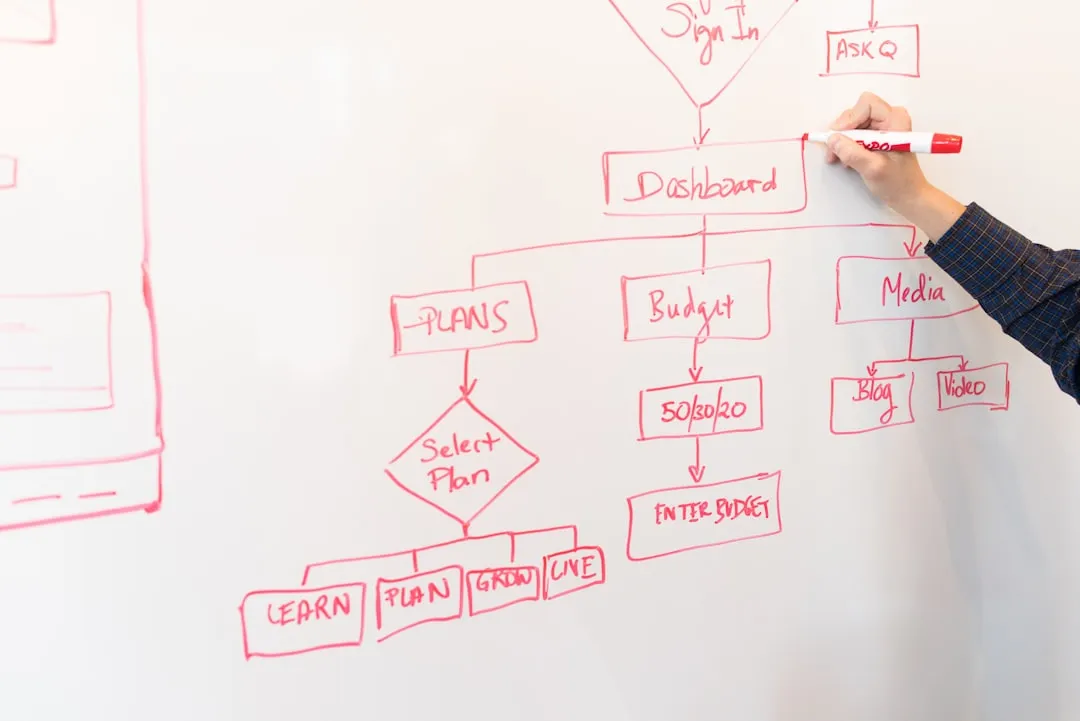
Workflow design for production voice AI requires mapping every call type, every exception path, every escalation trigger, and every downstream action — before a single call goes live. Organizations that skip this step discover the gaps at the worst possible time: during a Monday morning surge with 40 calls in queue.
80% of healthcare AI projects fail to scale beyond the pilot phase, and the primary driver cited by implementation specialists is not technology — it's people. "The most technically perfect AI system will fail if the nurses hate using it or the doctors don't trust it."
For voice AI in a medical practice, the relevant stakeholders aren't clinicians — they're front-desk coordinators, office managers, and call center staff. These are the people whose daily workflows are being restructured. If they weren't involved in the deployment decision, weren't trained on what the AI handles versus what it escalates, and weren't given clear protocols for reviewing AI call outcomes, they will work around the system rather than with it.
The result: coordinators manually re-checking every AI-handled call, creating parallel workflows that double the administrative burden instead of reducing it. The AI is technically running. The efficiency gains are not.
Change management for voice AI isn't a training session. It's a structured process: defining which call types the AI owns, which it escalates and why, how staff review AI call logs, how exceptions are handled, and how outcomes are measured. Organizations that build this process before go-live reach production. Those that treat it as a post-launch problem don't.
A signed Business Associate Agreement is the starting point for HIPAA compliance in voice AI — not the finish line. The gap between "we have a BAA" and "this platform is genuinely HIPAA-ready" is where a significant number of deployments stall, particularly in organizations with active compliance oversight.
The specific risks to evaluate: How does the platform handle PHI in call transcripts? Where are transcripts stored, and for how long? How does patient data flow through any third-party AI model providers the platform uses? Is there role-based access control on call logs and recordings? Is there a full audit trail for every interaction involving patient data?
40% of hospitals have had unauthorized AI tools used within their systems — what Wolters Kluwer (January 2026) calls "shadow AI." The compliance exposure from an inadequately governed voice AI deployment isn't hypothetical. It surfaces in audits, in breach notifications, and in the procurement review that kills the renewal.
Greetmate is HIPAA-ready with BAA available, built from the ground up for healthcare communication workflows — not retrofitted from a general-purpose voice platform where PHI handling was an afterthought.
This is the failure mode that vendor marketing never mentions, because it implicates their deployment model directly. Most voice AI platforms are sold as self-serve SaaS: you buy the license, you configure the workflows, you integrate the EHR, you build the call flows, you test, you launch. For a single-location practice with a technically capable office manager, this can work. For a 10-location DSO, a behavioral health group with 15 providers, or an MSO managing workflows across 30 practices, it doesn't.
The configuration burden for a production-grade voice AI deployment — mapping call flows, building escalation logic, integrating the EHR, testing edge cases, training staff, monitoring the first weeks of live calls — is substantial. When that burden falls entirely on an internal team that also runs daily operations, deployments stall. Not because the technology doesn't work, but because no one has the bandwidth to finish the implementation.
McKinsey's 2025 State of AI report found that only 11% of companies report significant financial impact from AI initiatives — despite 72% having adopted AI in at least one business function. The gap between adoption and impact is, in large part, an implementation support gap.
Why Healthcare AI Projects Stall Before Production

A production-ready voice AI deployment for a healthcare organization has six observable characteristics:
1. Bi-directional EHR integration. The system reads and writes. Appointments created by the AI appear in the EHR without manual intervention. Cancellations update availability in real time. Patient records are updated after intake calls. If any of this requires a coordinator to manually reconcile, the integration is not production-ready.
2. Workflow coverage for every call type. Every inbound call scenario — scheduling, rescheduling, cancellation, insurance questions, directions, after-hours urgent routing, new patient intake — has a defined path. Every path has a defined escalation trigger. Nothing falls into a black hole.
3. Measurable deflection with quality controls. Production deployments routinely achieve 50%+ call deflection rates — but deflection without quality control is not a success metric. Production-ready means you can see which calls were resolved by the AI, which were escalated and why, and what the scheduling outcomes were. Reporting is built in, not bolted on.
4. HIPAA architecture that holds up to scrutiny. Full audit logging, role-based access, PHI-safe transcript handling, and a BAA that covers the full data flow — including any third-party model providers used by the platform.
5. Ultra-short response time in real-world conditions. Not in a lab. On actual telephony infrastructure, under real call volume, with the audio quality variation that comes from patients calling from mobile phones, noisy environments, and regional carrier networks. Greetmate's platform operates at ultra-short response times — built to feel like a natural conversation, not a system processing a request.
6. A clear escalation path to human staff. Production-ready voice AI doesn't try to handle everything. It has clear, well-designed escalation triggers — clinical questions, distressed patients, complex insurance issues, anything requiring human judgment — and routes those calls reliably. The AI's job is to handle what it handles well, not to replace human judgment where it's genuinely needed.
Reduce front-desk call volume and improve patient communication.
Go live in hours with done-for-you setup.
The organizations that reach production consistently share one characteristic: they didn't configure the system themselves.
Managed implementation — where the vendor builds and owns the workflow layer, handles EHR integration setup, designs the call flows, manages testing, and supports the go-live — closes the gap between pilot and production in a way that self-serve licensing cannot. It eliminates the implementation burden from internal teams. It brings deployment expertise that an office manager or IT coordinator, however capable, simply doesn't have. And it creates accountability: if the workflow doesn't perform, the vendor is responsible for fixing it.
For multi-location groups and MSOs, managed implementation isn't just convenient — it's the only model that scales. Configuring voice AI site-by-site, with each location's team handling their own setup, produces inconsistent workflows, inconsistent escalation paths, and no cross-portfolio reporting. Managed implementation delivers standardized workflows across every location from day one.
BCG's 2026 healthcare AI analysis is direct on this point: the organizations capturing competitive advantage from AI are the ones that "seamlessly integrate AI into the flow of human work" — not the ones that deployed a tool and hoped adoption would follow.
Greetmate offers both a self-serve software platform for teams that want to build and own their own workflows, and a white-glove managed implementation model where Greetmate builds the entire workflow and automation layer — delivering operational value fast, without putting the configuration burden on your team. For multi-location operators and MSOs, the managed model is specifically designed to deploy consistently across locations, with centralized reporting and standardized call handling from day one.
Book a 30-minute discovery call — we'll map your current call operations and show you exactly what a production-ready workflow looks like.
Before committing to any voice AI platform, work through these questions with every vendor you evaluate:
Any vendor who can't answer these questions specifically and in writing is not ready for a production deployment. A compelling demo is not a production deployment.
Why do most healthcare voice AI pilots fail to reach production?
The primary failure modes are shallow EHR integration that breaks at scale, workflow design built for demos rather than daily operations, change management treated as an afterthought, HIPAA architecture gaps that surface under scrutiny, and self-serve implementation that places the full configuration burden on internal teams. Each is solvable — but only if addressed before deployment begins.
How long does it take to deploy a production-ready voice AI system for a medical practice?
For a single-location practice with straightforward scheduling workflows, a managed deployment typically runs 6–8 weeks from contract to full launch. Mid-size practices with 10–25 providers run 8–10 weeks. Multi-location groups with complex EHR configurations and location-specific routing logic may run 10–14 weeks. Self-serve deployments without implementation support consistently take longer and have higher failure rates.
What does bi-directional EHR integration actually mean in practice?
It means the voice AI both reads from and writes back to your EHR in real time. When a patient schedules via the AI, the appointment appears in the EHR without manual entry. When a patient cancels, availability updates immediately. Patient records are updated after intake calls. Without bi-directional integration, every AI-handled call creates manual reconciliation work — which eliminates most of the efficiency gain.
Is voice AI HIPAA compliant?
Purpose-built healthcare voice AI platforms can be HIPAA compliant, but compliance requires more than a signed BAA. Evaluate end-to-end encryption, role-based access controls, full audit logging, PHI handling in call transcripts, and how patient data flows through any third-party AI model providers used by the platform. Greetmate is HIPAA-ready with BAA available, built specifically for healthcare communication workflows.
What's the difference between a self-serve and managed voice AI deployment?
In a self-serve model, your team is responsible for configuring workflows, integrating the EHR, building call flows, and managing testing and launch. In a managed model, the vendor builds and owns the workflow layer, handles integration setup, designs call flows, and manages the go-live process. For multi-location groups and MSOs, managed implementation is the only model that reliably reaches production — self-serve deployments at scale consistently stall due to internal bandwidth constraints.
The pilot-to-production gap in healthcare voice AI is not a technology problem. It's a deployment problem — and it's solvable with the right implementation model, the right EHR integration depth, and the right workflow design discipline before a single live call goes through the system.
The practices and groups that are running voice AI in production in 2026 made a different set of decisions at the start: they chose platforms with genuine bi-directional EHR integration, they treated workflow design as a pre-launch requirement not a post-launch fix, and they had implementation support that didn't leave configuration to an already-stretched internal team.
That's the standard Greetmate is built to meet. 35%+ front-desk workload reduction, 70–80% routine task automation, and a white-glove managed implementation model that delivers operational value without putting the burden on your team. If you're evaluating voice AI for your organization or your clients, start with the checklist above — and hold every vendor to it.
Handle patient calls around the clock — including after-hours and overflow — so your front desk can focus on in-office care.
Automate appointment scheduling, patient follow-ups, and reactivation outreach through workflow-driven voice communication.
Connect with your existing EHR, scheduling tools, and operational systems for seamless, end-to-end patient communication.
See Greetmate in Action.
Healthcare voice AI infrastructure — live in hours.
Ready to see what a production-ready voice AI workflow looks like for your organization? Book a discovery call and we'll walk through your current call operations — and what it would take to get to production in 60 days.
Find helpful articles in our blog that are all about business, customer service and AI technology.
The write-back actions verified today for athenahealth, eClinicalWorks, Open Dental and Dentrix, the CRM routes for calls that don't belong in a chart, and who actually builds the workflow.
The healthcare version of missed call text back: an automated callback within sixty seconds, an SMS fallback, and a staff handoff, plus the TCPA and HIPAA rules the practice owns.