Do You Need a Medical Call Center? Three Options Compared
Outsourcing, another hire, or automation with human overflow. Which one fits depends on your call pattern, not the vendor's pitch.

| Greetmate
The front desk goes home at five. The phones don't. When you search for after hours triage to close that gap, you find two kinds of pages: nurse-triage vendors selling licensed symptom assessment, and answering services that take a message and page someone. Almost nothing explains what actually happens on the call: what the caller hears, what the system does with what they say, and how your on-call provider finds out.
This post walks through exactly that, step by step: the routing rules, the mid-call alert, the two ways the provider can respond, and where every call that doesn't escalate lands by morning. The system described here routes and escalates. It never assesses symptoms, screens callers, or gives clinical advice. That judgment belongs to your licensed team, and the routing rules are yours to write.
Table of Contents
After hours triage is the loose phrase for handling calls that arrive after close. Strictly, triage is a clinical function: a licensed clinician assessing a caller's symptoms and deciding how urgent they are. On a phone system, the honest version is routing: apply the rules the practice wrote, escalate what they flag, record the rest. Symptoms are never assessed.
Search the phrase and most of what ranks is nurse-triage companies: licensed RNs who evaluate callers' symptoms against clinical protocols like Schmitt-Thompson. That's a real product, and a clinical one. If what your practice needs overnight is symptom assessment, that's what those services sell, and you'd buy it knowing that's what it is.
This post describes the other thing: a routing layer. The system answers, captures what the caller says, applies rules your practice defined, and escalates what those rules flag. What counts as clinical is never the system's call to make; that judgment stays with your licensed team. The workflow's job is speed and context: the right call, to the right person, with the details attached.
The volume behind this is old news. A 1979 study in The Journal of Family Practice counted 474 after-hours contacts per 1,000 active patients per year, and found 72% were handled entirely by telephone. The current scale shows up in deployment data. At Inclusive Therapy Group, a Greetmate deployment measured 836 calls: 68% arrived after hours, 501 callers were helped immediately, and 33% resolved at first contact. Mostly requests that don't need a human tonight, plus a share your rules send to the on-call provider.
One after-hours call, start to finish:
Across all five steps the system's job never changes: route and escalate. It doesn't assess symptoms, screen callers, or advise. When a request is clinical, the workflow's job is to reach a human on your team fast, with the context attached.
At On Your Mind Counseling, another Greetmate deployment, 73% of 520 measured calls arrived after hours, and 357 of them would otherwise have landed in voicemail. The average call ran 37 seconds: a stated reason, a confirmation or a captured message, done.
When a caller's stated reason matches an escalation rule, an alert goes out during the call. It's structured: who's calling, the callback number, what they said, which rule they hit. It lands wherever your on-call provider already looks, whether that's SMS, Slack, or the practice's messaging tool.
Two paths from there. The provider can join the call while the caller is still on the line: no callback loop, nothing repeated. Or the provider calls back within the minute on the captured number, while the request is fresh.
The alert path is built so the gap between the caller's statement and the provider's phone buzzing is seconds. The escalation happens on the call, not as a page that arrives with the morning pile. At Inclusive Therapy Group, that showed up as 217 callbacks eliminated and 501 callers helped immediately: contact resolved at first touch instead of a voicemail-and-callback chain that can stretch across two days.
For what one of these conversations actually sounds like, there's a full live-call walkthrough in another post on this site.
These rules are written before go-live, during scoping: what escalates, what summarizes, where each type of call lands. Book a scoping call and your after-hours rules are the first item on the agenda.
Most after-hours calls don't escalate. They're reschedules, questions, requests to hear back. Where each one lands decides what your staff walk into at 8 a.m.
Every non-escalated call closes as a structured summary: caller, callback number, stated reason, requested action, outcome. It's delivered wherever your team already works, whether that's Slack, SMS, a messaging tool like Spruce Health, or the EHR inbox. Greetmate connects to dozens of EHRs and the other systems your practice already runs, so nobody opens a separate dashboard to see what came in overnight. Where a summary carries patient information, it moves under a BAA. Greetmate is HIPAA-ready, with a BAA available.
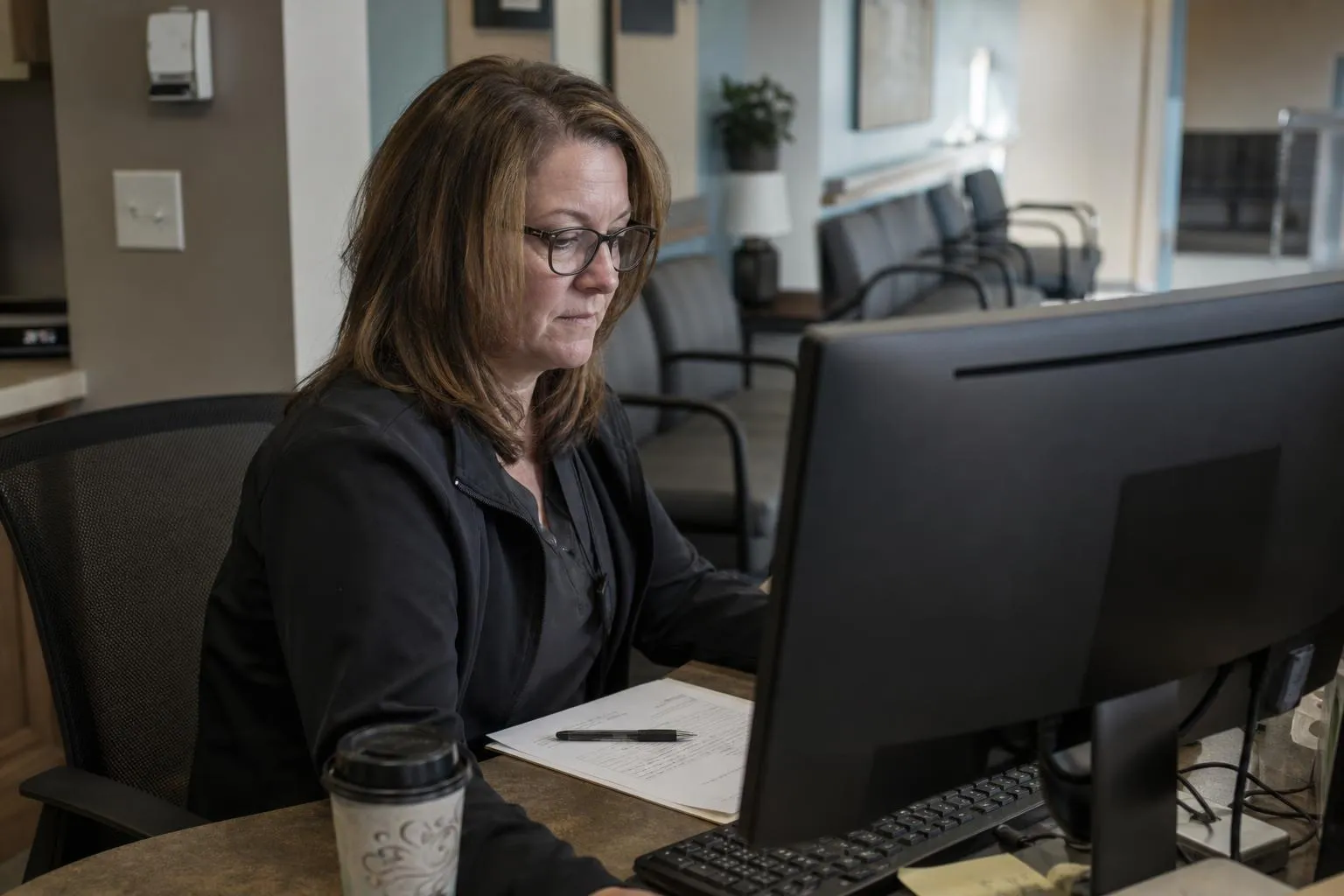
The morning difference is measurable. At Inclusive Therapy Group, the deployment recovered 69.5 staff hours over the measurement window: time that had been going into voicemail review and callback attempts, back at the front desk. The day starts with a readable list instead of an inbox of audio.
Every routed call also becomes a record leadership can see: what came in overnight, what escalated, what it produced. A group running several locations gets the same routing standard at every site, and one report covering all of them.
An on-call answering service takes a message and pages your provider. The page usually arrives after the call ends, and the provider's next step is a return call built on whatever context the operator wrote down. This model routes by your rules, escalates mid-call, and hands the provider either a live caller or a captured number with structured context attached.
A nurse triage line is a different category, and a legitimate one: licensed RNs assessing callers' symptoms against clinical protocols. If what you need overnight is clinical assessment, that's the product those vendors sell. It's not what this post describes. Here the system handles routing, and the judgment stays with your team.
The volume is real either way. One answering-service vendor reports 30% of calls at an internal medicine practice arriving outside regular hours, consistent with what practices see in their own phone logs.
To weigh the options side by side, including what each model costs and where each one breaks, we compared four after-hours coverage models in a longer post.
Strictly, it's a clinical function: a licensed clinician assessing a caller's symptoms and deciding how urgent they are. The way most practices use the phrase, it means whatever happens to calls that arrive after close. This post covers the second meaning, handled as routing: rules the practice wrote, escalation when a rule matches, a record for everything else. Assessment always stays with licensed staff.
No. The system routes and escalates. It never assesses symptoms, screens callers, or advises on care, and clinical judgment belongs to the practice's licensed team. The routing rules that decide what reaches a human are written by the practice.
In seconds. When a caller's stated reason matches an escalation rule, a structured alert reaches the on-call provider while the conversation is still live, by SMS, Slack, or the practice's messaging tool. The provider can join the call or call back within a minute on the captured number.
No. An answering service takes a message and pages someone, usually after the call ends. This model escalates mid-call, delivers structured summaries to the systems your staff already use, and follows routing rules the practice wrote itself.
The clinical judgment on any after-hours call belongs to your licensed team. That doesn't move. What's left is an operations design: what happens in the ten seconds after the phone is answered, where the alert goes, and what your staff find at 8 a.m. A rules-based routing layer answers it with capacity you don't have to hire. Coverage extends past 5 p.m. without a proportional increase in administrative cost, and the reporting shows it in terms an owner can read: what came in overnight, what escalated, and what it produced.
If that's the gap you're sizing up, book a discovery call and walk through what your after-hours call flow would look like. The routing rules are the first thing we write together.
Please note: This article describes routing and escalation workflows only. It is not clinical or triage advice — Greetmate does not assess symptoms, screen callers, or provide medical guidance, and clinical judgment always belongs to your practice's licensed team. Automated outbound calls and texts are subject to TCPA regulation.
Find helpful articles in our blog that are all about business, customer service and AI technology.
Outsourcing, another hire, or automation with human overflow. Which one fits depends on your call pattern, not the vendor's pitch.
Healthcare has the slowest lead response time of any industry. Here is the trigger-by-trigger workflow that calls every new patient inquiry back inside five minutes and books in the same call.