What makes an answering service HIPAA compliant? Checklist
A BAA is only the entry ticket. Here is what should actually be inside it, how PHI moves through texts and recordings, and ten questions to ask a vendor before you sign.
| Greetmate
A patient with shoulder pain doesn't pick a provider the way they used to. They open three tabs, call two practices, and submit one web form. Whoever responds first — with a real human-quality conversation, a real appointment offer, and a real follow-through — usually gets the visit. The other two get nothing. Not a callback. Not a polite "no thanks." Just silence.
This is the quiet shift reshaping patient acquisition in 2026: the first practice to respond usually wins. Not the best-marketed practice. Not the closest one. Not even the one with the best reviews. The first one to actually pick up, follow up, and confirm.
If your front desk is rolling calls to voicemail at lunch, if web form leads sit in an inbox until tomorrow morning, if your after-hours coverage is a recording — you are not losing patients to better competitors. You are losing them to faster ones. This article breaks down the data behind speed-to-response, why patient access is now a competitive moat, and the operational moves leading multi-location groups are using to win the race.
Table of Contents
The behavior isn't new. The data is.
Across industries, 78% of customers buy from the first company that responds to their inquiry. In healthcare, the dynamics are even sharper, because patients are typically dealing with discomfort, anxiety, or a payer-driven deadline. They want a problem solved now, not next week.
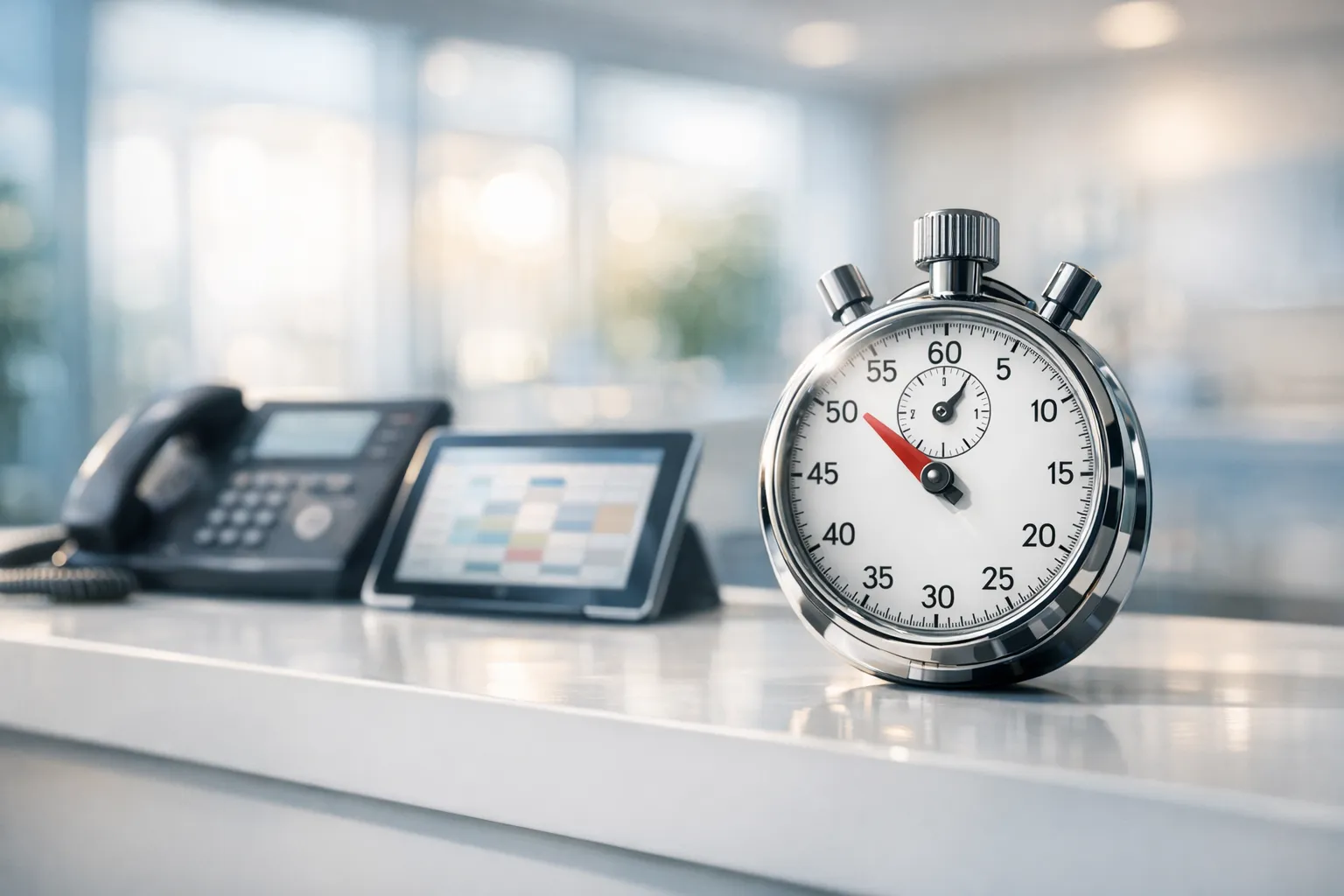
When a prospective patient calls a practice, the clock isn't measured in days. It's measured in minutes. According to research summarized by RevenueHero, responding within one minute can lift conversion rates by 391% versus responding even a few minutes later. After five minutes, the chance of meaningfully connecting with that lead drops by a factor of 100. After 30 minutes, you are 21 times less effective at qualifying that lead than if you had responded in five.
In the consumer healthcare context, the math is brutal. The average prospective dental patient makes 3.5 calls per scheduling need. They are actively shopping. They will not wait for you to call them back tomorrow morning. They will book with whoever picks up first.
Three forces are stacking on top of each other:
The practice that answers first isn't winning because it's better. It's winning because intent is a perishable good.
Most administrators underestimate the financial bleed from delayed response, because it doesn't show up as a line item. It shows up as a quiet ceiling on growth.
Start with the missed-call layer. The average medical practice misses roughly 23% of incoming calls, and the figure is significantly worse in dental and specialty contexts. When practices miss those calls, the safety net doesn't catch them: 85% of patients will not call back after a first unanswered attempt, and 62% of patients won't leave a voicemail when they reach one.
That means, of every 10 missed calls, roughly 8 to 9 patients are gone — to a competitor or out of the care pipeline entirely.
Now layer on the slow-response layer. Even when a practice eventually responds, the response often arrives after the patient has already booked elsewhere. Harvard Business Review research cited by Spruce Health found that businesses contacting potential customers within an hour were nearly seven times more likely to have a meaningful conversation than those that waited even an hour longer — and 60 times more likely than those that waited a day.
A day is not a fast response in 2026. A day is an obituary for that lead.

Patients shopping for care typically contact multiple providers in a single session. Because intent decays within minutes and switching costs are near zero, the practice that responds first — with a real conversation, an appointment offer, and a clear next step — captures the booking before competitors even pick up. Studies across industries show first responders win up to 78% of inquiries, and in healthcare, where 85% of patients never call back after a missed call, the speed advantage compounds.
If you don't know what percentage of your inbound calls and web inquiries get a response within five minutes, you don't know your real patient acquisition cost. Greetmate's analytics surface that number across every location.
The loss almost never happens because the practice doesn't care. It happens because the operational design wasn't built for a speed-to-response world. Five patterns show up repeatedly across the multi-location groups we work with.
Peak inbound call volume in many practices hits between 10 and 11 AM, and then again right after lunch. That's also when front desk staff are stretched between check-ins, check-outs, and the phones. Missed call rates spike. So do hold times — the average healthcare hold sits at 4.4 minutes, five times longer than the HFMA-recommended target.
Roughly 41% of calls to medical practices come outside business hours. For dental, 63% of urgent patient issues arise outside business hours, yet only 19% of dental practices operate 24/7 phone service. Every one of those after-hours calls is a patient at peak intent. Most of them go straight to voicemail — and 87% of new dental patients who hit voicemail move to a competitor.
Web form leads, contact-us inquiries, and "request an appointment" submissions are often routed to a shared inbox checked when someone has time. The average response window stretches from hours to days. By then, the patient has called three competitors.
Even when a callback happens, the patient is often back at work, in a meeting, or driving. Voicemail to voicemail. Two or three rounds of tag, and the lead goes cold. Manual callbacks are not a viable response strategy in a sub-five-minute world.
For groups with 5, 12, or 30 locations, response speed is wildly inconsistent. One location is on top of everything; the next is buried. Leadership has no real-time visibility into which sites are leaking patients, because the data doesn't roll up anywhere. The fastest location subsidizes the slowest, and growth stalls without anyone knowing why.
Front Desk Overload: The Real Constraint on Practice Growth walks through how the front desk became the operational bottleneck — and what to do about it without simply hiring more people.
Fast is no longer "by end of day." It's not even "within the hour." The benchmark patients have absorbed from every other industry is immediate acknowledgment, sub-five-minute meaningful response, and same-session resolution where possible.
For a healthcare operation, that translates into four concrete standards:
This is what "patient access as a competitive advantage" actually means. Not a marketing line. An operational standard.
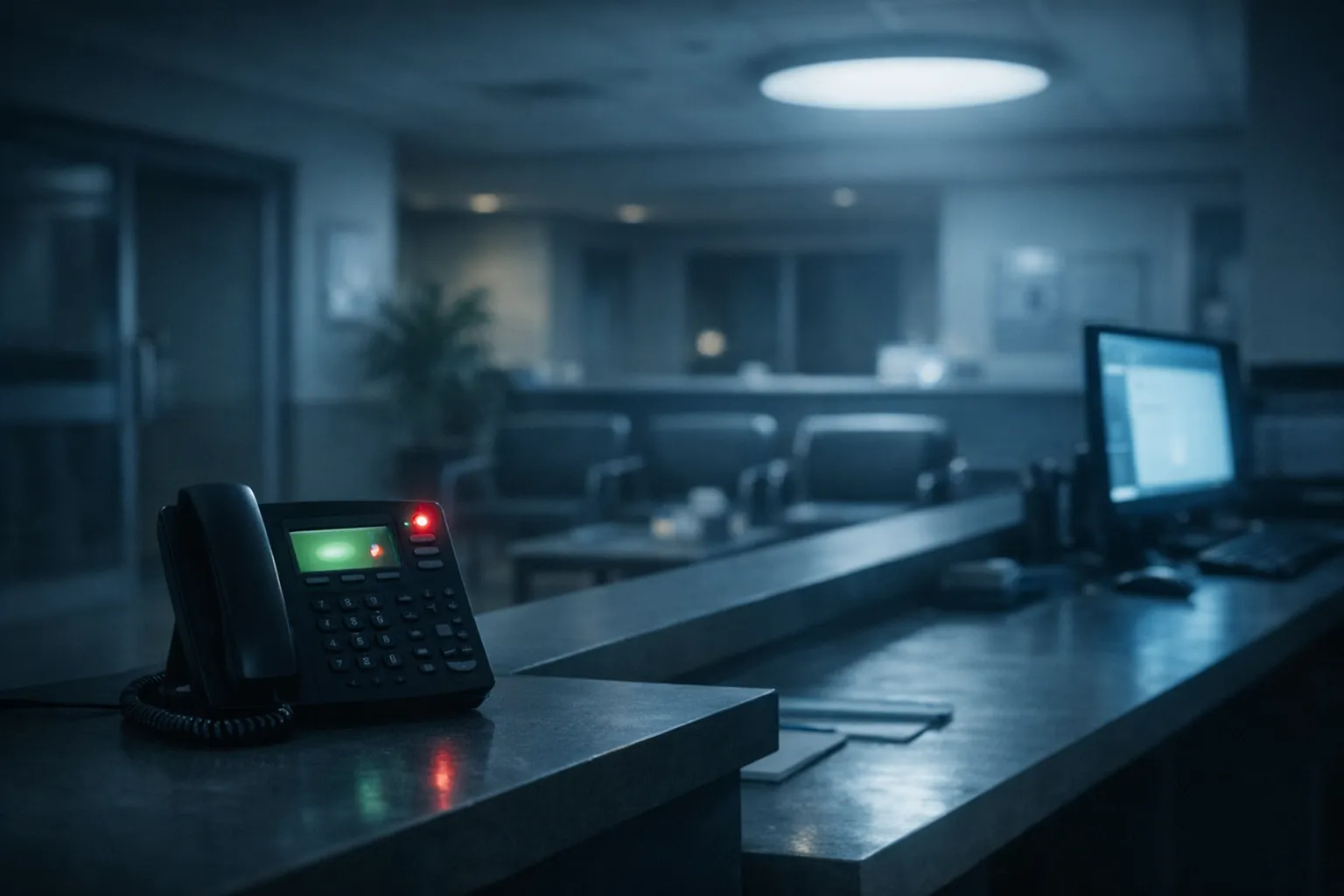
The staffing math doesn't work. Healthcare call centers typically operate at 60% of required peak staffing coverage, and front desk turnover, training cycles, and PTO mean any single location is one sick day away from rolling calls to voicemail. Even well-staffed practices can't justify a third-shift receptionist to handle the 11 PM inquiry from a patient with a question about their treatment.
The operational answer isn't more headcount. It's a tech-enabled layer that handles the bulk of routine inbound communication so humans are freed up for the work that genuinely requires judgment.
Here is what a first-responder operation looks like in practice, especially for multi-location and specialty groups. None of this is theoretical — it's the operating model being deployed by orthopedics groups, DSOs, behavioral health groups, urgent care chains, and PT/OT/MSK practices today.
An AI voice agent answers every call, on the first ring, 24/7. Not a phone tree. A real conversation. It handles new-patient intake, appointment scheduling, insurance pre-screening, prescription refill routing, and routes complex calls to the right human. Greetmate's healthcare voice infrastructure automates roughly 70–80% of routine patient communication tasks and is HIPAA-ready with BAA available.
This is the difference between "we have voicemail" and "we never miss a call." The latter is now the table-stakes standard.
When a call does drop, when a web form comes in, when a patient texts the main line — an automated SMS goes out within seconds. The message acknowledges the miss, offers to book an appointment, and includes the next three open slots. That's the response that wins. It's instant, it's actionable, and it doesn't depend on a human being available.
A fast response without a real booking option is theater. The first-responder model requires deep integration into the practice's actual calendar — athenahealth, Epic, ModMed, Tebra, eClinicalWorks, Dentrix, Open Dental, NexHealth, and the rest. Greetmate connects to 300+ apps including major EHRs, so the AI doesn't just say "someone will call you back." It books the slot, sends the confirmation, and triggers the reminder cadence — with the scheduler connection built and tested during implementation rather than assumed.
For groups operating across 5, 20, or 100 sites, response speed has to be standardized at the platform level — not left to each office manager's habits. That means the same routing logic, the same scripts, the same escalation rules, the same reporting. Greetmate's multi-location operations layer gives ops leadership real-time visibility into response time, handoff outcomes, and after-hours capture by location.

This is where most pilots stall. Practices buy a voice AI tool, point it at the main number, and within four weeks it's quietly turned off because the workflows weren't designed around the practice's actual call patterns. Greetmate is delivered as a tech-enabled service: implemented, not just activated; guided rollout, not DIY configuration. Basic deployments often go live within hours, with refinement continuing over the first weeks until the AI is consistently handling the bulk of routine traffic. (How healthcare voice AI deployments move from pilot to production.)
Reduce front-desk call volume and improve patient communication.
Go live in hours with done-for-you setup.
The practical benchmark is sub-five-minute meaningful response on inbound calls, web forms, and texts — with immediate acknowledgment (under 60 seconds) on every touchpoint. Industry research shows conversion rates can be 21 times higher when leads are contacted within five minutes versus 30, and patient intent decays even faster in healthcare because alternatives are a Google search away.
Across multiple studies, roughly 62% of patients won't leave a voicemail at all, and roughly 85% will not call back after the first unanswered attempt. In dental specifically, the no-callback rate climbs as high as 75%, and 87% of new patients who hit voicemail move to a competitor.
The average medical practice misses about 23% of incoming calls, per Talkdesk healthcare data. Dental practices average closer to 32%, with some studies documenting rates as high as 68%. Solo and single-receptionist practices have the highest miss rates, particularly during peak hours and lunch breaks.
No, and that framing misses the point. The goal isn't to replace the front desk — it's to remove the routine 70–80% of inbound communication that's burying them, so humans focus on complex cases, in-person care, and high-touch patient moments. Done well, this typically reduces front desk workload by 35% or more while raising answer rates above 95%.
Yes — for two reasons. First, adoption is uneven. The practices building first-responder operations now are pulling patients from competitors who are still treating voicemail as a safety net. Second, the operational sophistication compounds: response speed is just the entry point; the durable advantage is in workflow depth, EHR-integrated booking, multi-location consistency, and reporting visibility.
For a long time, patient acquisition strategy meant marketing strategy. Better SEO, more reviews, sharper paid spend, refreshed website. All of that still matters. But it's increasingly upstream of the real bottleneck.
The practices winning new patients in 2026 are the ones that have figured out patient access is the strategy. They've turned response speed into an operational standard, not an aspiration. They've built infrastructure that responds in seconds, books in real time, covers 24/7, and reports up to leadership. They are not buying more leads. They are converting the leads everyone else is already paying for and losing.
That is what Greetmate exists to build — healthcare voice and SMS infrastructure that turns patient access into a moat, deployed as a tech-enabled service with white-glove implementation across single sites and multi-location groups. If you want to see what a first-responder operation looks like inside your own practice's numbers, book a discovery call.
The first practice to respond usually wins. Make sure it's yours.
Find helpful articles in our blog that are all about business, customer service and AI technology.
A BAA is only the entry ticket. Here is what should actually be inside it, how PHI moves through texts and recordings, and ten questions to ask a vendor before you sign.
The vendor checklists cover training and demos, none of it checkable. Here are five things you can get in writing before the contract starts, with benchmark numbers to hold against.