Get AI call notes into your EHR without writing code
The write-back actions verified today for athenahealth, eClinicalWorks, Open Dental and Dentrix, the CRM routes for calls that don't belong in a chart, and who actually builds the workflow.
| Greetmate
When a call rings out at the front desk, missed call text back turns a lost call into a recovered one: an automatic callback within sixty seconds, a text if nobody picks up, and a task for your staff if both miss.
Home-services businesses have run some version of this for years: one automatic text, "sorry we missed you," nothing else. That version breaks in a medical office. The caller is usually a patient, and the number connects to a chart. Outreach runs on consent rules the tool was never built to honor.
This is the healthcare version: what the workflow is, how fast the callback has to happen, the two-step sequence, the plumbing between your phone system and the voice layer, what to report, and the TCPA and HIPAA rules your practice owns before go-live.
Table of Contents
Key Takeaways:
Missed call text back is an automated response to an unanswered call: when a call rings out, the phone system triggers a callback and a text to the caller, offering help or inviting a reply. In a healthcare practice, the workflow runs under a BAA and TCPA consent rules, and every path routes back to your staff.
The term came out of the small-business marketing world, where it means one text from the business's number. In a medical office it has to mean more. The caller is a patient or about to become one, the number is attached to a chart, and the practice answers for what the automation says, to whom, and when.
Search for missed call text back today and nearly everything ranking is setup content for plumbers, salons, and restaurants. Four things break when you carry that setup into a medical office.
The first problem is the BAA. The tool answering for the practice touches patient information, and in healthcare that runs under a Business Associate Agreement, which small-business platforms weren't designed around.
The second is the question it asks. "Sorry we missed you. What can we help with?" is fine for a drain-cleaning customer. A patient answers it with details that shouldn't land in a generic marketing inbox.
The third is the disconnect from your systems. The tool can't tell an existing patient from a new inquiry, so the recovered call ends in a text thread someone walks over to the EHR by hand.
The fourth is where it stops. If the patient doesn't reply, nothing else happens. Missed call recovery ends in silence, which is where it ended without the tool.
None of that makes those tools bad. They were built for businesses with no charts, no consent file, and no compliance officer. A medical office is a different place to work.
Within sixty seconds if the response is automated. Within "when someone gets a minute" if it isn't.
The research most cited here is sales-response work, not healthcare. Oldroyd's analysis of roughly 100,000 call records found that calling back within five minutes instead of thirty made the call about 100 times more likely to connect and 21 times more likely to qualify, and that waiting ten minutes instead of five dropped qualification odds by roughly 400 percent. Older research on general inbound inquiries pointed the same way: firms replying within an hour were about seven times more likely to reach the person, while average response times ran 42 hours.
Those numbers weren't measured on patients. Treat them as what they are: evidence that unanswered calls age badly. Missed call recovery is a race against the caller's next move, and the first practice to respond usually wins. A staff-managed callback queue loses that race on any day with a check-in line.
For what a missed call costs a practice in dollars, we ran that math separately in Every Missed Call Is a Lost Patient. This post stays on the mechanics of getting the call back.
The small-business version sends one text and stops. A practice needs a sequence, because a callback and a text reach different people, and a missed call is too expensive to cover with one channel.
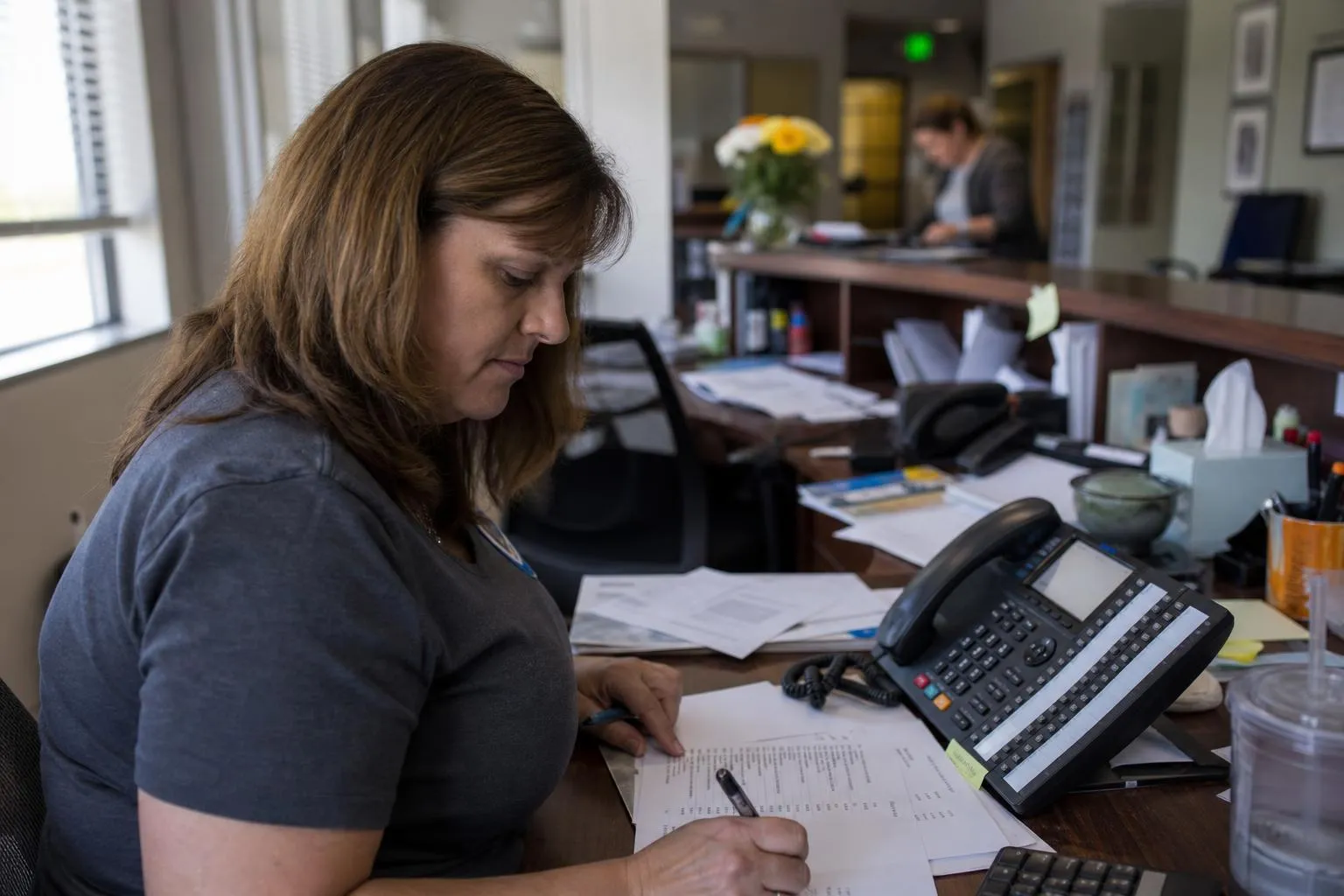
Everything starts in the phone system: a call rang, nobody answered, it ended, and the platform sends a signal the moment that happens. No one has to notice a red light on the desk phone.
Missed calls cluster, which is why the event matters. Overflow call handling fails at the lunch rush and the Monday-morning pile, when every line is lit. After hours is the other cluster: an analysis of 300,000 patient calls across healthcare practices found roughly 11% arriving evenings and weekends, when nobody is there to notice. We compared after-hours coverage models in After-Hours Answering Services for Medical Offices.
The voice agent calls back and identifies the practice. From there the call works like any handled call: it can answer routine questions, take a message, or capture what the caller needs so it lands with the right person on your team. If the caller wants a human, the call routes to your staff with the context attached.
One boundary: the workflow captures and routes. It doesn't assess. Decisions about what a call means clinically stay with your team; the automation's job is that the call reaches them.
If the callback goes unanswered, the sequence sends a text from the practice's main number. This step exists because about 80% of calls from unfamiliar numbers go unanswered, and a callback shows up as a number the patient may not recognize. Text messages get read at roughly 98%, so the missed call text still reaches them when the call didn't.
The message stays short: who's texting, why, and how to reply. Practice name, "sorry we missed your call," the main number, an easy way to respond. Nothing about why they called, and nothing that presumes who they are.
The sequence tries a set number of times, then stops and hands off. The caller becomes a task on a staff list (who called, when, what's known), and the front desk sees it with context instead of finding silent gaps in the phone log a week later. Nothing loops, and nothing disappears.
Want to watch the whole sequence (missed call, sixty-second callback, text, staff handoff) run on a live call? Book a walkthrough and bring your phone system's name; the team will scope which call outcomes should trigger the sequence for your practice.
Reduce front-desk call volume and improve patient communication.
Go live in hours with done-for-you setup.
The sequence lives across two systems: the phone platform where calls land, and the automation layer that runs the callback and text. The bridge between them is the missed-call event.
Most modern VoIP and call-tracking platforms, including CallRail, 8x8, and Aircall, can send an event when a call ends unanswered. What that event is called, and which plans include it, varies by vendor. So the first step of any build is confirming your system exposes a missed-call trigger at all. That's a five-minute question for your phone vendor, and it's the difference between a sequence that runs itself and one that depends on someone reading call logs.
From there, the event connects to the automation layer through integration, which is the piece that stalls most do-it-yourself healthcare setups. The event has to reach the voice AI, the voice AI has to know which practice and workflow it's acting for, and the results have to land in the systems your staff already use. Greetmate builds that path as part of the deployment: the workflow is scoped, connected to your phone system, and tested before go-live, and a person on the team guides the rollout through launch. On the integrations side, Greetmate connects to dozens of EHRs and the operational systems around them, including a healthcare automation partnership with Keragon.
Because these events and messages carry patient information, the whole path runs under a BAA. Greetmate is HIPAA-ready, with a BAA available.
Most missed call text back software built for small businesses reports sends: the text went out. A practice needs to know what came back:
Those numbers turn a phone feature into an operations report. Leadership can see what came in and what it produced: how many missed calls the sequence caught this month, how many became appointments, and where the front desk still needs help. For multi-site groups it doubles as a consistency check: if one location's recovery rate is half the others', you've found your next process fix.
Automated outbound calls and texts are regulated, and the rules tightened in February 2024. The FCC's order in Docket 24-17 classified AI-generated voices as "artificial or prerecorded voice" under the TCPA, so the AI-spoken callback in this workflow is a regulated call, not a courtesy.
That puts several requirements on the practice. You need prior express consent for automated calls and texts to cell numbers. The message itself has to offer an automated opt-out, honored promptly when someone uses it. Calling hours are limited, by federal law and by state, and many states run their own mini-TCPA statutes with stricter windows. And the damages are statutory: $500 to $1,500 per call or text, with state attorneys general enforcing in parallel.
The platform can build the mechanics: opt-out handling, quiet hours, suppression lists. The consent file is the practice's. How you capture consent at intake and scheduling, and how you prove it later, is policy you own.
Disclaimer: Automated outbound calls and text messages are regulated under the TCPA and related state laws, and AI-generated voices count as artificial voices under the FCC's 2024 rules. Consent, calling-hour, and opt-out requirements apply, and your practice owns its consent and opt-out policy. This article is operational information, not legal advice — have counsel review your calling and texting program before launch.
An automated response to an unanswered call: the phone system fires an event when a call rings out, and the caller gets a callback and a text offering help or a way to reply. The healthcare version runs under a BAA and TCPA consent rules, and every path routes back to your staff.
Automated, within sixty seconds. The most-cited response research, measured on sales callbacks rather than patients, found five-minute callbacks about 100 times more likely to connect than thirty-minute ones. Staff-managed callback queues rarely hit five minutes on a busy day; automation hits sixty seconds by default.
The sequence sends a text from the practice's main number, since most calls from unfamiliar numbers go unanswered and nearly all texts get read. If both miss, retries are capped and the call becomes a staff task with context. The sequence never loops silently.
It can be, when the workflow runs under a BAA with consent and opt-out handling built in. Tools imported from the small-business world generally weren't designed for patient information at all. Greetmate is HIPAA-ready, with a BAA available.
Whether a given phone platform ships a missed-call text feature is a support-doc question, and the answer varies by vendor. The healthcare questions are different: does the vendor sign a BAA, how is consent handled, where do recovered calls land, and can leadership see what the sequence produced.
Trades businesses solved missed calls years ago with one automatic text. Healthcare never got a version that respected patient information, consent law, and the front desk's actual day, so most practices still lose unanswered calls to the next name on the caller's list.
The healthcare version is a sequence: a callback inside sixty seconds, a text if it misses, a staff task if both do, and reporting that shows what came back. It runs under a BAA, it honors the TCPA rules the practice owns, and it connects to the systems your team already uses.
Greetmate builds it that way: healthcare voice and SMS infrastructure, with the workflow scoped, built, and tested before go-live. Book a demo and watch the missed-call recovery sequence run on a live call. Bring your phone system, your worst Monday, and the questions your compliance officer will ask. All three belong in the scoping call.
Handle patient calls around the clock — including after-hours and overflow — so your front desk can focus on in-office care.
Automate appointment scheduling, patient follow-ups, and reactivation outreach through workflow-driven voice communication.
Connect with your existing EHR, scheduling tools, and operational systems for seamless, end-to-end patient communication.
See Greetmate in Action.
Healthcare voice AI infrastructure — live in hours.
Find helpful articles in our blog that are all about business, customer service and AI technology.
The write-back actions verified today for athenahealth, eClinicalWorks, Open Dental and Dentrix, the CRM routes for calls that don't belong in a chart, and who actually builds the workflow.
Ten callers, one line, and a queue that clears by noon. A one-week phone-log exercise that proves the phone is the bottleneck, not the front desk, plus an honest comparison of the four coverage options.