Speed to Lead for Medical Practices: The 5-Minute Call
Healthcare has the slowest lead response time of any industry. Here is the trigger-by-trigger workflow that calls every new patient inquiry back inside five minutes and books in the same call.
| Greetmate

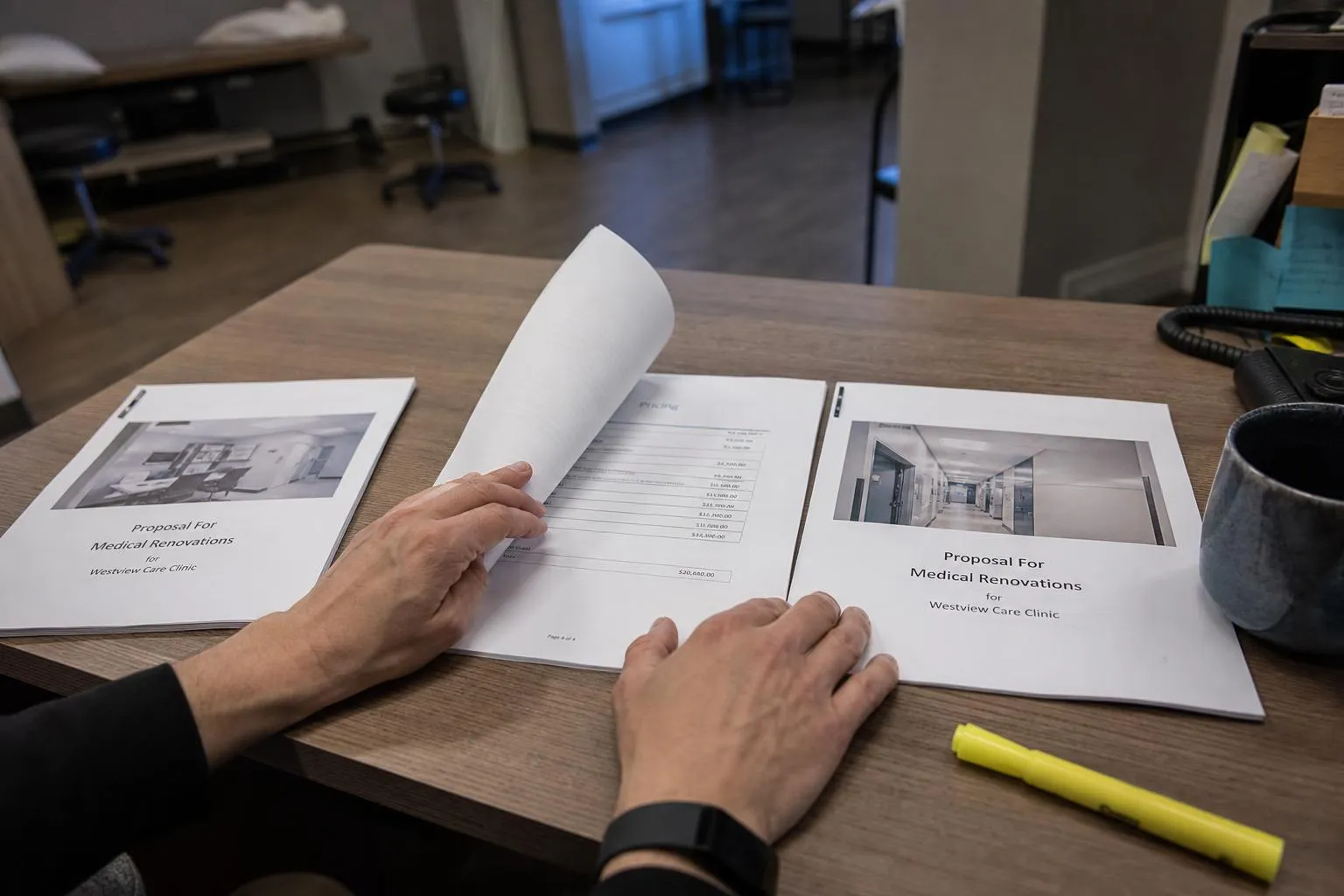
A practice with a phone problem usually ends up with three quotes in the same folder and no honest way to line them up. One is a self-serve tool at a couple hundred dollars a month. One is an enterprise contact-center proposal with implementation broken out as its own line item. One is a managed platform priced like infrastructure. All three demos used the same words: voice AI for healthcare, answers every call, books appointments, connects to your EHR.
Price per month is the wrong axis for that comparison. These are three different kinds of purchase, and the monthly figure is the only unit they share.
The phones are the bottleneck, not the people answering them. Front desk teams are already covering check-in, insurance questions, provider requests and a full inbox while the lines ring, and software does not fix that on its own. What fixes it is a workflow that reaches production and keeps working after the practice changes.
This piece compares the three routes on the things that decide whether that happens: who designs the workflow, who connects it to your scheduling system, who tests the edge cases before patients hit them, how long it takes to go live, what it really costs, and who owns it in month four.
Key Takeaways:
Table of Contents
Self-serve tools publicly advertise somewhere in the range of $99 to $599 a month, with higher self-serve tiers above that. Enterprise health-system platforms are quoted far higher, and implementation usually arrives as a separate professional services fee. Greetmate sits between them, generally $999 to $2,500 a month depending on scope, with the implementation included in the engagement.
Line up those three numbers and the cheap one wins every time. That comparison only holds if all three deliver the same finished thing on the same day, and they do not.
Every voice AI deployment, at every price point, contains the same seven jobs:
Those jobs exist whether or not anyone is assigned to them. The license fee tells you what the software costs and nothing about who does the seven jobs, and that assignment is what separates a working phone workflow from a demo that impressed everyone in March.
If you want the longer argument on why deployments stall between demo and production, we covered it in why healthcare voice AI pilots stall before production. Here we are staying on the purchase itself.
No-code agent builders are real products. The voices are good, the builders are usable, and you can have something answering a test line the same afternoon. For a solo practice with simple hours and one appointment type, that can be enough.
At 30 or more calls a day across multiple providers, it stops being enough quickly. Specialty scheduling rules, insurance questions, provider preferences, after-hours coverage, referral capture: all of it has to be designed by somebody who knows both the practice and the tool, and that somebody is on your payroll.
Roundups describe these tools as a good fit for practices with "a clear operations owner." In practice that means a full-time employee takes on a second full-time job. It goes well for a few weeks. Then a provider leaves, open enrollment hits, or the schedule blows up, and the tuning stops. The flow keeps running on logic that no longer matches how the practice operates, and nobody is reviewing the calls it handled badly.
MIT's NANDA research found that 95% of generative AI pilots fail to deliver measurable results. Most of those failures have little to do with the model. The pilots never left pilot.
The cost of that is not the license. It is the months of calls handled by a half-built flow, the front desk quietly working around it, and the appointment capture that was the whole reason you bought it.
Enterprise contact-center platforms deserve credit. They are genuinely capable, built for scale, and if you run a 40-hospital system with a centralized access center, they are frequently the right answer.
Now size one against a six-provider orthopedic group. Procurement runs long. Implementation is scoped and billed as professional services, separately from the platform. Published deployment windows for large suites are commonly measured in months, not weeks. And the roadmap belongs to accounts far larger than yours.
That last part matters more than the price. In January the group adds a Saturday clinic and needs the after-hours flow changed on two weeks' notice. On this route that is a ticket, and the ticket sits behind requests from customers with a hundred times your contract value. The vendor is professional and the process works as designed. It was just designed around somebody else's calendar.
Greetmate built its own platform. That was a delivery decision, and the buyer feels it in four ways.
Call behavior is structured and testable. The workflows are deterministic and guard-railed, so a call follows a defined path and escalates to a human when it hits something outside that path. That is different from an open-ended prompt and a hope that the model behaves. Because we control the logic end to end, we can test it before patients hit it and tell you what it will do.
A request can turn into a build. When a practice needs something the platform does not do yet, we can build it. Elsewhere it becomes a feature request in a queue.
Fixes ship from the team that wrote the code. There is no vendor underneath us to escalate through, and no support tier translating your problem into someone else's ticket format. Reliability and escalation paths are ours to guarantee.
The economics work because we are not paying a margin to a platform sitting under ours. That margin is what pays for white-glove implementation at this price point. Owning the stack is what makes done-for-you delivery possible without enterprise pricing.
The platform is HIPAA-ready with a BAA available, and response latency is fast enough that callers are not left in the odd pause that makes people hang up. Greetmate was recognized in the 2025 Globee® Awards for AI and the 2025 Titan Awards IT for AI & Automation.
Most vendor conversations leave implementation abstract.
Phase one gets scoped to one workflow with a clear operational trigger: after-hours coverage, new-patient intake, scheduling overflow, or referral capture. Narrow on purpose. It reaches production faster and proves the value before it expands.
We build the call flow, the routing rules, the escalation paths and the intake capture in the workflow builder, using your language, your appointment types and your escalation rules. The workflow then talks to the systems the practice already runs, so staff keep working where they already work.
QA happens before go-live rather than through your patients: wrong numbers, frustrated callers, ambiguous requests, the caller who asks for a person. The front desk gets trained on what arrives in their queue, what has already been handled, and what needs them.
Then it goes live. Basic deployments often activate within hours, and managed vendors in this category commonly quote go-lives measured in weeks. The first weeks after launch are where the real tuning happens, and that work is ours.
"Does it work with our EHR" is usually the question that ends or continues the conversation.
Greetmate integrates with dozens of leading EHRs and the list keeps growing, covering scheduling, notes, medications and lab results, plus webhooks, APIs, scheduling systems, CRMs, calendars, forms and inboxes. You can see the current picture on the interoperability page.
The more useful question is who builds that connection. Industry surveys suggest legacy system integration is the single largest driver of AI project overrun, cited by 48% of respondents, with change management close behind. On the self-serve route, connecting and maintaining that link is your team's problem. On the enterprise route, it is usually a scoped professional services item with its own price. On a managed route, the vendor owns it.
| Self-serve builder | Enterprise platform | Managed healthcare platform | |
|---|---|---|---|
| Workflow design | Your ops person | Professional services, billed separately | Included, scoped with you |
| EHR / scheduling connection | Your team | Separate SOW | Vendor-owned |
| Edge-case testing | Whoever remembers | Formal, long cycle | Before go-live, vendor-run |
| Staff training | Internal | Included in services fee | Included |
| Time to live | Minutes to never | Months | Fast for a focused phase one |
| Change in month four | Ops person's evening | Ticket in a queue | Scoped change by the build team |
| Monthly cost | Roughly $99 to $599 | Far higher, plus implementation | $999 to $2,500 |
The license fee is the small number. The rest you have to run with your own figures.
Internal build cost = hours per week your ops person spends × their loaded hourly rate × weeks until it reaches production.
Then add: months of unrealized appointment capture while the workflow sits in pilot, and ongoing tuning hours per month after go-live.
Example, purely to show the shape: 6 hours a week × $45 loaded rate × 16 weeks = $4,320 in staff time, against roughly $2,400 in annual license fees. Your figures will differ. The point is the ratio. </Callout>
Illustrative first-year cost of a self-serve route (example figures only)
This is why software budgets miss. Research on AI total cost of ownership found that 85% of organizations misestimate AI project costs by more than 10%, roughly a quarter miss by more than 50%, and first-year overruns commonly run 30 to 40%. The missing money is almost never the license. It is the internal labor nobody put in a budget line.
There is a cleaner way to compare vendors on cost: cost per resolved call rather than cost per month. We broke that math down in what a medical answering service really costs, and the same arithmetic works on any voice AI quote.
Greetmate's $999 to $2,500 a month covers the software and the delivery: scoping, configuration, integration, testing, training, go-live and early refinement. It is priced as infrastructure because the work is included. The current breakdown sits on the pricing page.
Reduce front-desk call volume and improve patient communication.
Go live in hours with done-for-you setup.
Almost every vendor comparison stops at go-live. Practices do not.
Four ordinary things that will happen within a year:
On the self-serve route, each of those is an evening for the person who built it, assuming they still remember how. On the enterprise route, each one is a ticket with a response time you do not control. On a managed route, it is a scoped change handled by the team that built the workflow in the first place.
For a nine-location dental group, this compounds. Every site drifting on its own means nine slightly different after-hours experiences and no way to compare performance across them. Standardizing the workflow once and pushing changes to every location is the whole operational argument for multi-location groups.
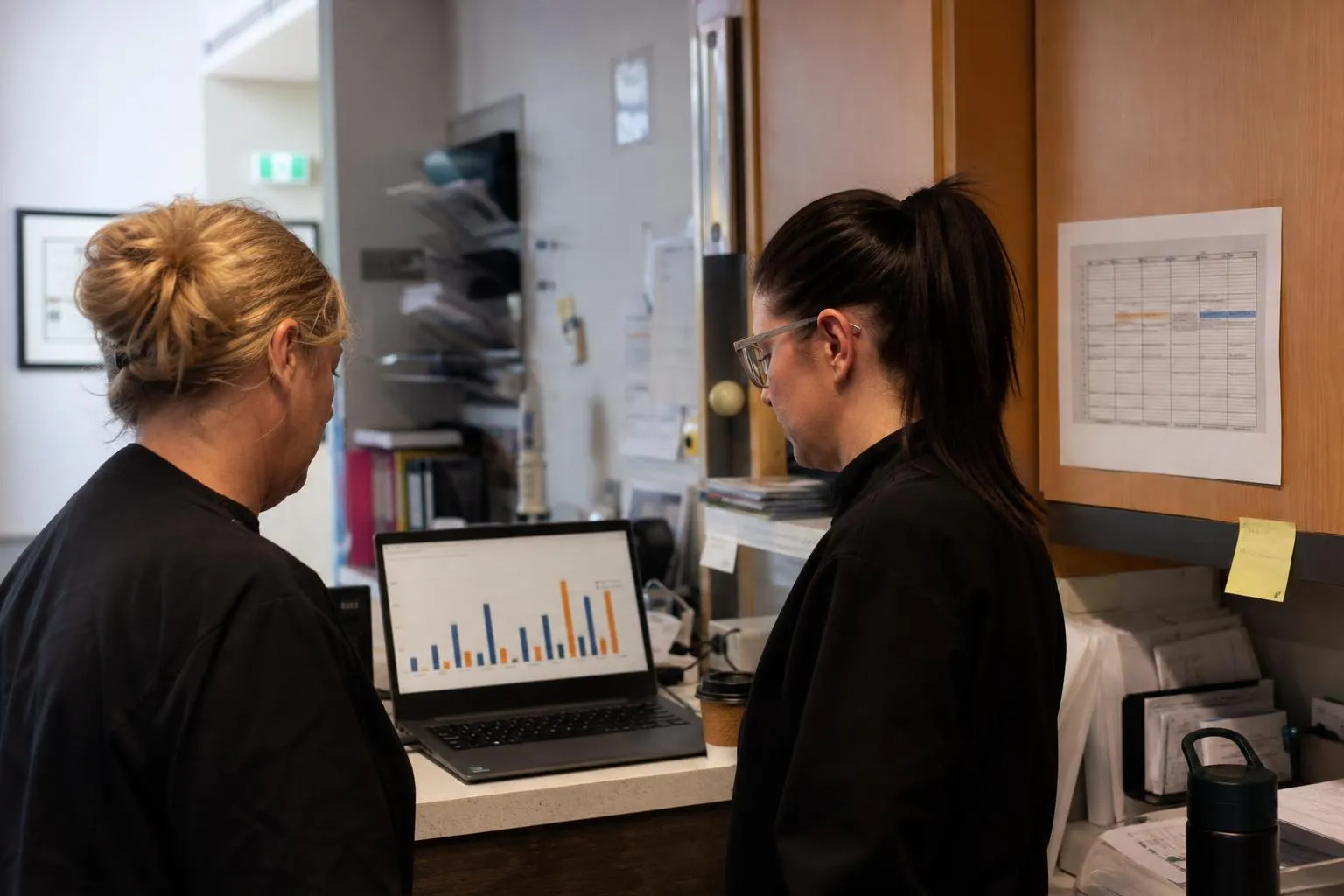
"There is a dashboard" is not reporting.
An owner or group executive needs a straight answer to a straight question: did this produce anything? That means call volume by time of day and by location, what came in, what it produced (booked, routed, resolved, escalated), what is still sitting with a human, and how all of that moves over weeks.
That is how you know whether the spend turned into captured appointments, and how a multi-site group compares locations on the same measures instead of on anecdote. For wider category context on where voice AI is actually delivering, see our read on the medical voice AI market.
Print these. They work on any quote, including ours.
If a vendor cannot answer question four, the seven jobs are landing on your team. That may still be the right trade, as long as you make it knowingly.
Publicly advertised self-serve tools generally sit around $99 to $599 a month, with higher self-serve tiers above that. Enterprise health-system platforms are quoted far higher and usually bill implementation separately. Greetmate typically runs $999 to $2,500 a month depending on scope, with workflow design, integration, testing, training and go-live support included in the engagement.
It depends entirely on whether someone on staff has real hours to own it. The license is genuinely inexpensive. The workflow design, EHR connection, testing and ongoing tuning are not free. They are paid in your team's time. If you have a dedicated operations owner with capacity, a self-serve tool can work. If that person already has a full-time job, the deployment usually stalls before production.
The pattern we see work best is a practice with 2 to 20 providers handling 30 or more calls a day, with a clear operational trigger such as missed calls, after-hours gaps, staffing pressure, or a scheduling bottleneck. Below that call volume, the phone is usually not yet the constraint. Above 20 providers, the conversation is usually about standardizing across sites.
Self-serve tools advertise deployment in minutes, and a basic test line genuinely is that fast. A production-grade workflow is not. Enterprise contact-center implementations are commonly published in months. Managed healthcare deployments typically run weeks, and a focused phase-one scope with Greetmate can often be live much faster than that.
No. The phone volume is the bottleneck, not the people. The workflow absorbs repetitive calls, after-hours demand and overflow during peak hours, so the front desk handles the interactions that need judgment, context and a human voice. Escalation to a person is a defined part of the flow, not a failure state.
Greetmate integrates with dozens of leading EHRs and the list keeps growing, covering scheduling, notes, medications and lab results, plus webhooks, APIs, scheduling systems, CRMs, calendars, forms and inboxes. The platform is HIPAA-ready with a BAA available. The more important question is who builds and maintains that connection, because that is where most implementation budgets go wrong.
Three quotes, three price points, and the cheapest one is only cheapest if the seven jobs do themselves. They do not. Every route costs the same design work, the same integration work, the same testing and the same maintenance. The only variable is who performs them, and whether that shows up on the invoice or in your operations manager's week.
Greetmate runs on a platform we built, which is why we can tell you how a call will behave, build the thing you need instead of filing it as a request, and ship a fix from the people who wrote the code. We scope the phase-one workflow, configure it, connect it to the systems you already run, test it before patients hear it, train your team, and stay on it after launch. Leadership sees what came in and what it produced.
If the phones are the constraint on your practice right now, the fastest way to find out whether this fits is a scoping conversation about your actual call volume and your actual workflow.
Book a demo and we will walk through what phase one would look like for your practice.
Find helpful articles in our blog that are all about business, customer service and AI technology.
Healthcare has the slowest lead response time of any industry. Here is the trigger-by-trigger workflow that calls every new patient inquiry back inside five minutes and books in the same call.
Seven retention motions, each with the workflow behind it: a list, a trigger, an outbound call or text, and a write-back. Reactivation, recall, no-show recovery, follow-up completion, feedback capture, and interval reminders, all running on schedules instead of staff willpower.